Why Your Business Needs an ERP System
Why Your Business Needs an ERP System (And Why Waiting Is Costing You Money)
Simon Cardona
CEO
Featured
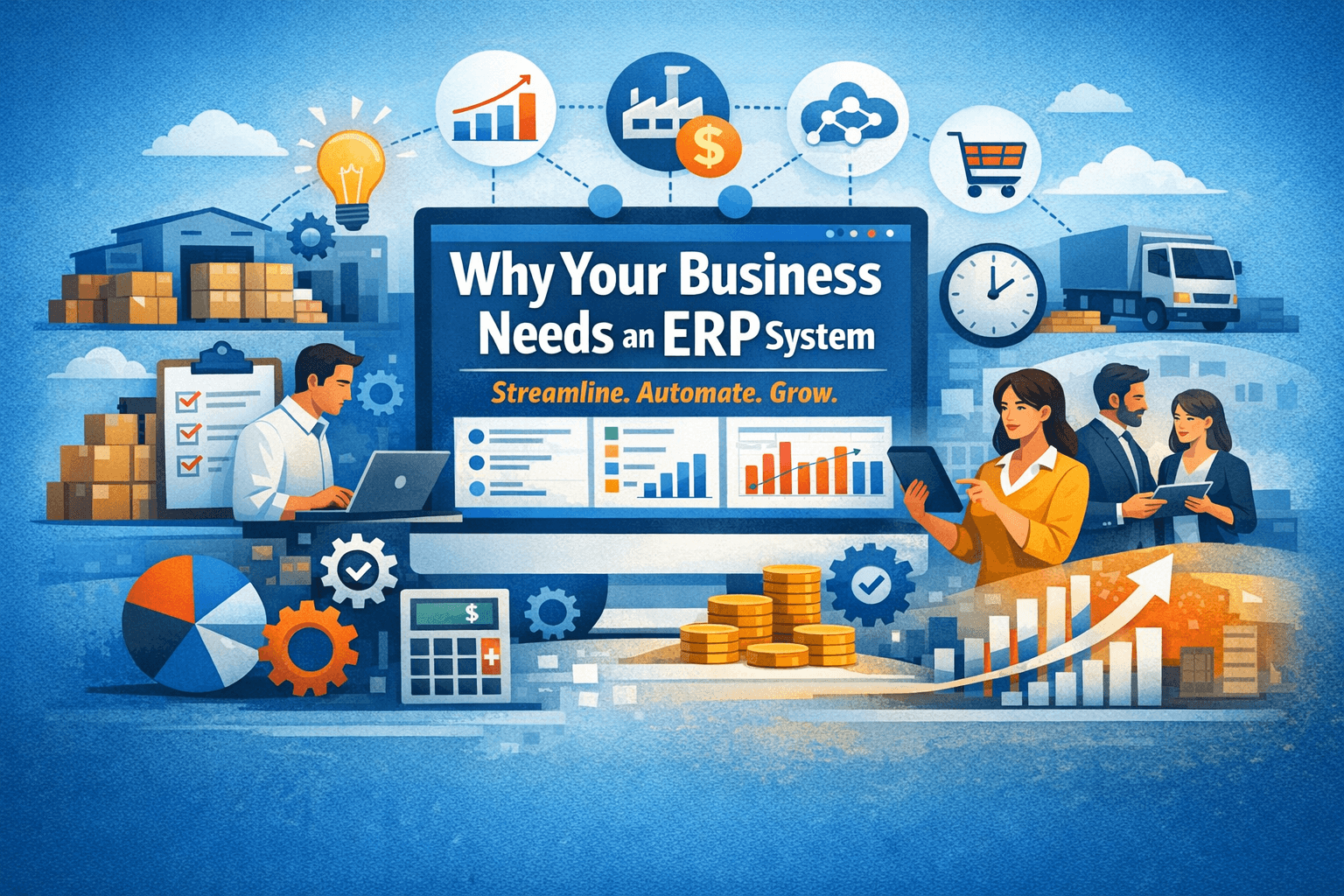
Running a business today is more complex than ever. Between managing operations, tracking finances, handling customers, and coordinating teams, things can quickly become overwhelming—especially when your tools are disconnected.
If you're still using spreadsheets, multiple apps, or manual processes, you're not alone. But you're also leaving efficiency, growth, and profitability on the table.
This is where an ERP system (Enterprise Resource Planning) becomes a game changer.
What Is an ERP System?
An ERP system is a centralized platform that connects all your business processes into one place—operations, finance, sales, inventory, project management, and more.
Instead of juggling multiple tools, everything works together in a single system.
Think of it as the operating system of your business.
1. Eliminate Chaos and Manual Work
Most growing companies suffer from the same problem:
too many tools, too many spreadsheets, and too many errors.
An ERP system:
Automates repetitive tasks
Reduces human error
Eliminates duplicate data entry
Keeps everything organized in real time
👉 Result: Your team spends less time fixing mistakes and more time growing the business.
2. Real-Time Data = Better Decisions
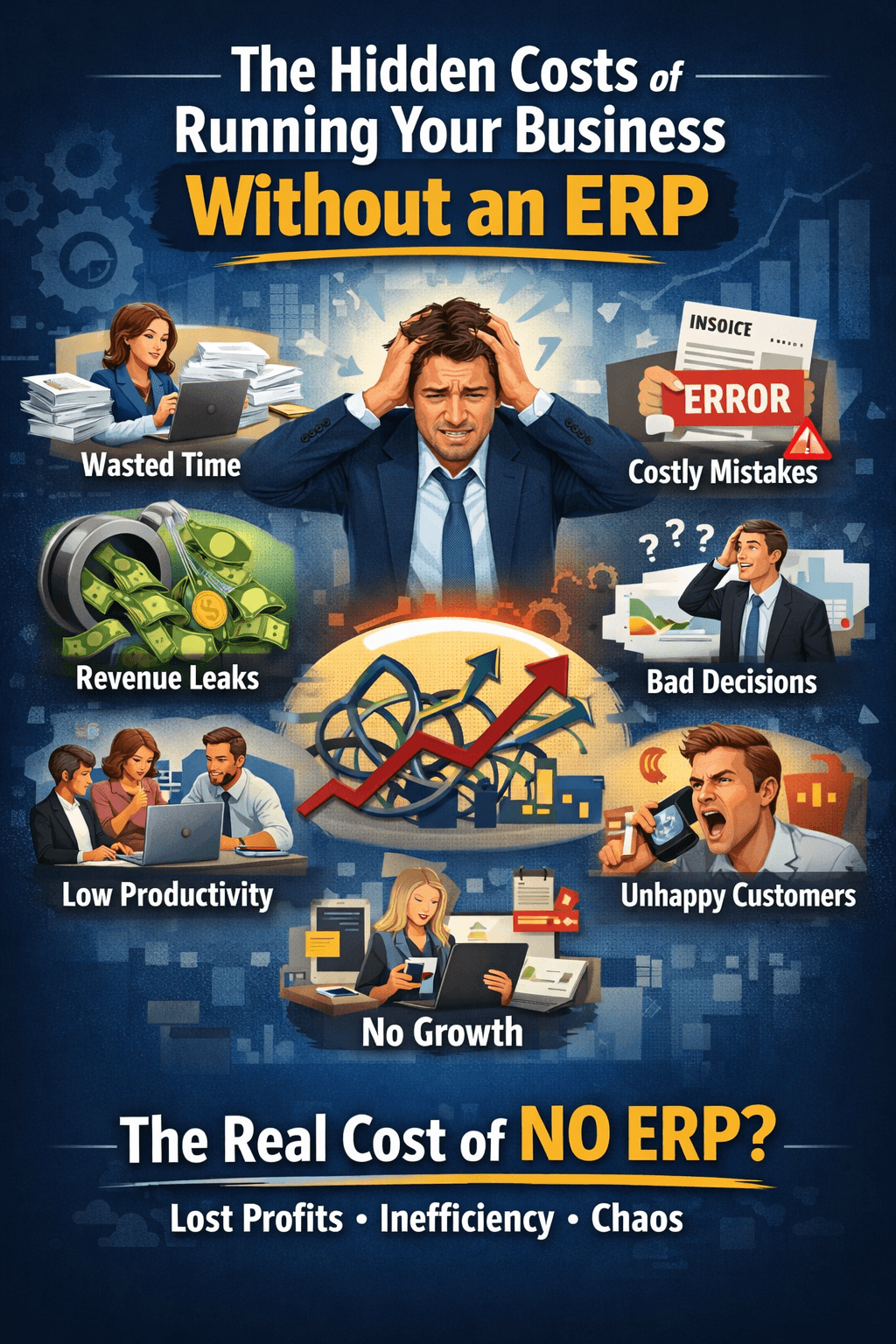
Without an ERP, decisions are often based on outdated or incomplete information.
With an ERP system:
You get real-time dashboards
You track performance instantly
You identify problems before they escalate
👉 Result: Faster, smarter decision-making that drives growth.
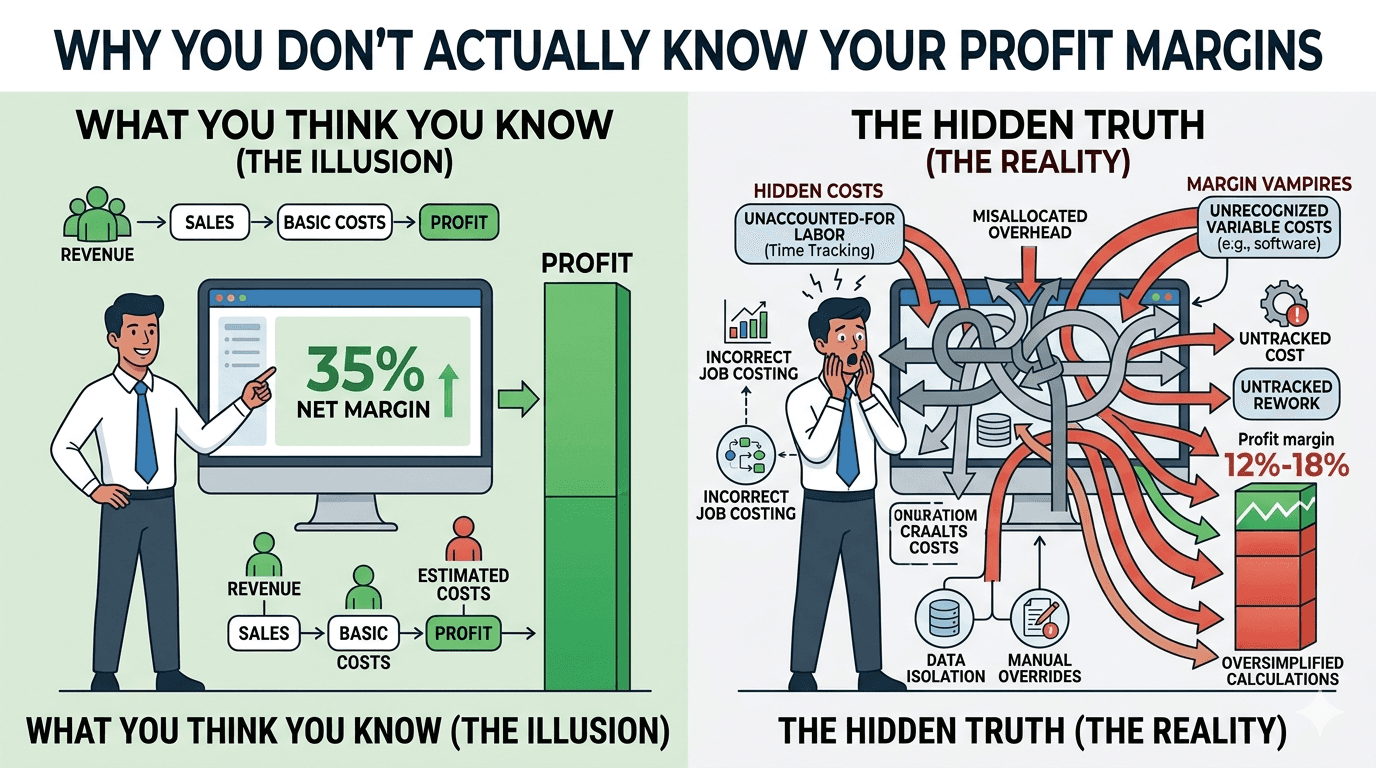
3. Full Visibility Across Your Business
Imagine knowing exactly:
Which projects are profitable
Where your money is going
What your team is working on
Which customers generate the most revenue
ERP systems give you complete visibility across every department.
👉 Result: No more blind spots. You stay in control.
4. Improved Team Productivity
Disconnected systems create friction:
Teams waste time switching between tools
Communication breaks down
Tasks fall through the cracks
An ERP system aligns everyone:
Centralized workflows
Shared data
Clear processes
👉 Result: Your team works faster, smarter, and more efficiently.
5. Scalability Without the Headaches
As your business grows, complexity increases.
Without an ERP:
Processes break
Data becomes messy
Operations slow down
With an ERP:
Your systems scale with you
Processes stay consistent
Growth becomes manageable
👉 Result: You grow without losing control.
6. Better Customer Experience
Customers expect speed, accuracy, and professionalism.
With an ERP system:
Faster quotes and responses
Accurate billing
Better communication
Organized project tracking
👉 Result: Happier customers and more repeat business.
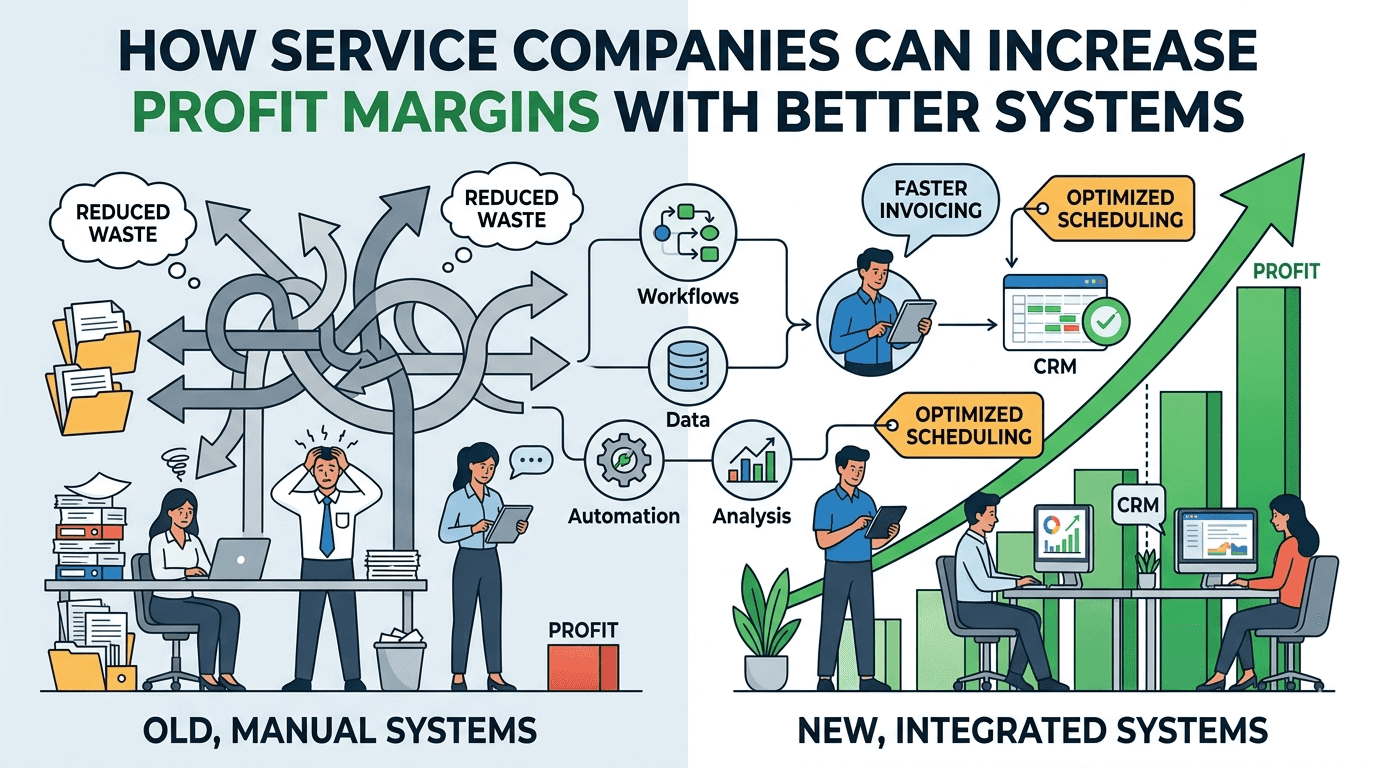
7. Increased Profitability
At the end of the day, everything comes down to profitability.
An ERP system helps you:
Reduce operational costs
Improve efficiency
Optimize resources
Identify profitable opportunities
👉 Result: More money stays in your business.
Why Most Businesses Delay (And Why That’s a Mistake)
Many business owners think:
“We’re too small for an ERP.”
But the reality is:
The earlier you implement it, the easier it is
The longer you wait, the more inefficiencies you build
Fixing chaos later is much more expensive
Final Thoughts
An ERP system is no longer a luxury—it’s a necessity for any business that wants to grow, stay competitive, and operate efficiently.
If your business feels:
Disorganized
Overwhelmed
Stuck in manual processes
That’s not a people problem—it’s a systems problem.
And the solution is simple:
centralize, automate, and scale with an ERP.
🚀 Ready to Take Control of Your Business?
At CAG Software Development, we built an ERP specifically for service-based companies that want to:
Streamline operations
Improve profitability
Scale with confidence
👉 Stop managing chaos. Start building systems.